
Happiness is quite the popular topic. There are countless books and publications on the subject and yet people still seem to have a hard time finding happiness. Here follows a little story about something rather benign that made me happy. I do not really know why but it did, and I want to share it because there are interesting lessons to learn from it.
One of my pair of shoes, which I bought some 12 years ago look beaten up. They are waterproof hiking shoes and I have to admit that I had not taken the best care of them all these years. They look so beaten up that over the past few years I had used them only for gardening purposes. Of course, they got dirtier and more beaten up but they are sturdy and so I kept using them. Lately, I used them to shovel snow and they got wet and showed some tough water stains. It reached a level of ugliness that bothered me. So, I looked at what kind of shoe care products we have in the house. My wife has a quite a collection of such products and I found a few that would help the shoes look a little bit better. I gave the shoes a good scrubbing and brushing. I applied care products a few times in all the creases and cracks to make sure they would nourish the leather. I finished with a good shoeshine and polishing and… I could not believe my eyes. I bought some new shoelaces and the shoes now look really great, almost as good as new. They look so good that I do not use them just for the garden anymore, but I use them for my trips to town during the winter. They are waterproof, comfortable and warm. That is ideal for our winter conditions here. It is also a lot cheaper than buying new shoes. I cannot explain why, but restoring these shoes has really made me happy. I am proud of them and I am proud of myself. Silly? Perhaps, but who cares anyway? All that matters is that it makes me happy. That is lesson one. Your happiness is for yourself only. Others do not have to understand or agree. As long as your happiness does not harm anyone else, it is nobody else’s business.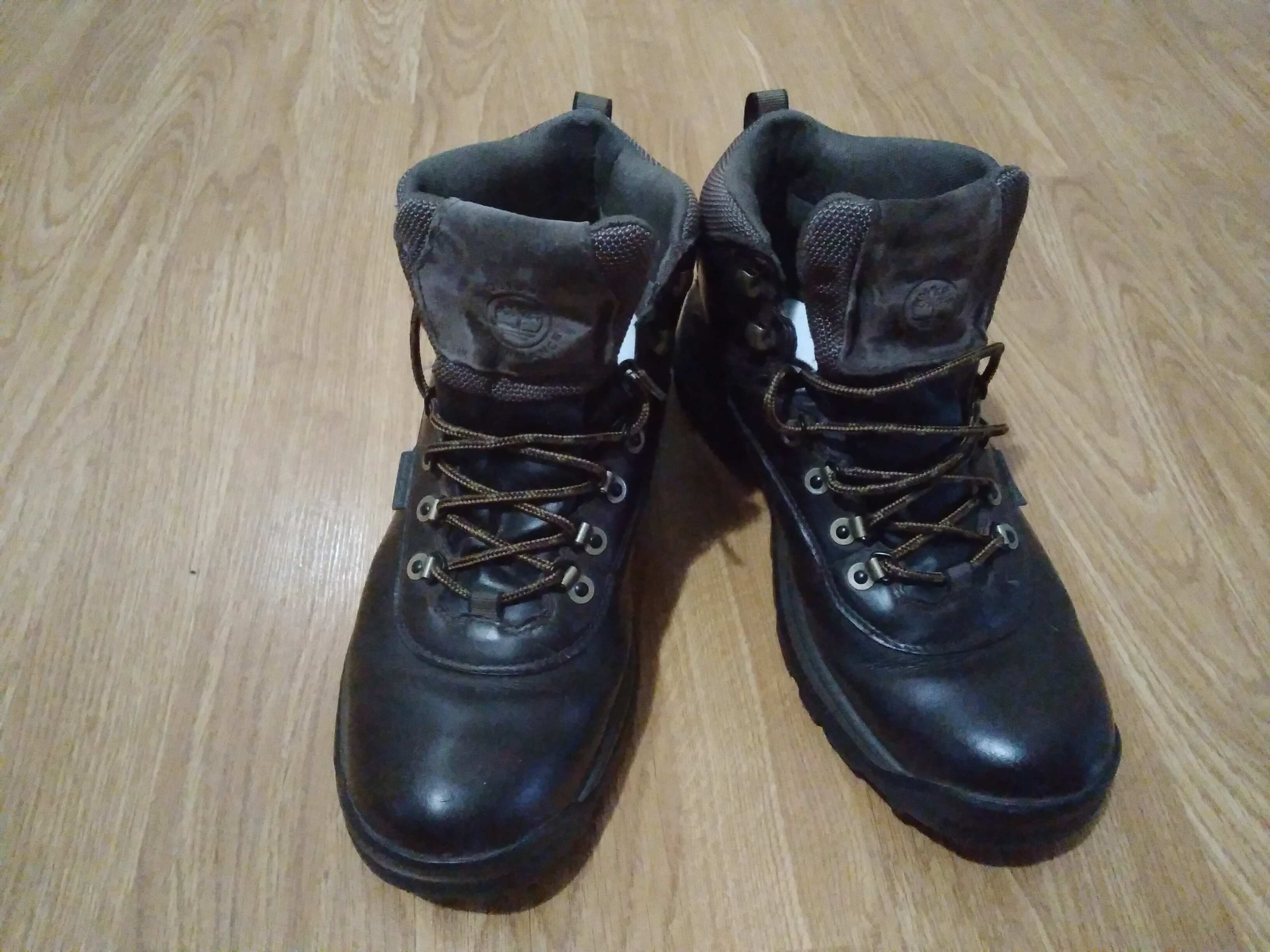
Lesson one is really important because it comes to a simple fact: happiness is about you, not about pleasing others, which means that others are not the ones deciding what makes you happy. But there are more lessons from this:
- Happiness is what make you feel good, regardless of what it is. There are no particular rules.
- Happiness is not necessarily about grand ideals. In fact, most of the time, it is not. It is about the little things, because little things are easier to achieve than bearing the world’s salvation on your shoulders.
- Happiness is not about money. For my shoes, all it took was some care products that we had in the house for years and a pair of new shoelaces. The total cost was just a few bucks, while buying similar new shoes would have cost at least 30 times more. Perhaps, the fact that the restoration cost so little was part of the happiness.
- Happiness is not about others, but it is about what you think and feel. Yet, I got some positive comments on my shoes, so I guess it confirms that they look good.
- Happiness is not about having fancy things or high-tech stuff. These are stupid hiking shoes and all it took was some shoe care products, a rag and, bit of elbow grease and less than a quarter of an hour.
If we focused on the little things of daily life that make us feel good, instead of desperately trying to keep up with trends to impress others, the world would be happier, except for marketers of course, but they, too, might find happiness in something else than what they currently do. To be happy, follow your feelings, not the trends. Happiness can only come from inside.
Copyright 2020 – Christophe Pelletier – The Happy Future Group Consulting Ltd.
 I have spent a long part of my career in industries dealing with perishable products. Per definition, such products cannot be stored for very long and this makes the business dynamics quite intense, and often stressful, as “everything must go” and for a profit, mind you. Therefore, my assignment to them, next to (or I should say as part of) doing the job was to make me hear some laughter. It did not matter what the reason would be, as long as there would be fun. In that line of work, we were lucky to be able to find many reasons to laugh because we were dealing with colorful characters and we could easily find the funny absurdities of the business. The head office would involuntarily also provide for much material to us as well. If my staff would not laugh frequently enough to my liking, I would pop in and bring some craziness of my own to help them out. The results were amazing. With a small team (comparatively to other units of the company or to competitors), we were able to deliver a performance second to none, we were able to solve more problems than the others were, and we were having fun. Even as we worked long hours, nobody burned out. On the contrary, success was constantly bring new and more energy to our team. Once again, the boring, unimaginative and bureaucratic HR department was wrong. Managing is getting things done by your team. Therefore, you had better take good care of your people, and the best way to do that is to have them laugh on the job. It means that they are having fun, and when you are having fun at work, it does not feel like work. Good managers know what is right for their business. Have them laugh!
 This has always been easy to do, because I rarely have left my door closed. I always have liked to be in close touch with the operational side of business and leaving the door open (as, of course walking around and interacting with the staff) is a great way to get informed really fast of any new development. So, at some point, we implemented the “venting session”. This consists of allowing the staff to in and get frustrations off their chests. Of course, this had to be structured adequately, as being regularly interrupted would not work well.
 This is just an example of how important presence and availability are in managing people. If you have done your hiring properly and brought in the right people in the right jobs, they will understand very quickly how to do what is expected from them and deliver the performance that meets, and in most cases exceeds the targets. The role of the manager in such a situation is a little comparable with a shepherd. You keep a good oversight of your troops, but if any one wanders in the wrong direction, you just bring him/her back on the right track.
![j0414117[1]](https://happyfuturegroup.files.wordpress.com/2009/05/j04141171.jpg?w=197&h=300 "Watch Them Soar!") To illustrate this, I cannot think of a better example than one of my employees when I was in the aquaculture business. She used to work for the accounting department of a different division, and her performance was not great. At that time, I needed someone to help us out with administrative tasks and with the processing of information. I was offered to hire her, although all the negative feedback I had heard was not encouraging. Fortunately for her, the manager under which she was working, was not exactly an example of trustworthiness or integrity, and I decided to meet her and see for myself who she really was. I remember meeting her on a ferry to one of the islands off the coast of Vancouver Island. She was sitting in her car and did not expect much good from me, as I am known as quite straight forward and decisive. Anyway, we had our meeting, which went rather well, and I decided to have her meet further with the rest of my team to discuss the operational needs a bit more in details. As there still was some hesitation about her real abilities, I decided to give her a chance, under the condition that we would review her performance after 3 months and then decide. If the performance was satisfactory, she would stay; if not she would go. And what a transformation! From an unmotivated and dull person, she turned into a dynamic and resourceful collaborator. She did an amazing work, had a great productivity and came with many great ideas on how to process and present the information we gathered. Later, the person to whom she was reporting (who reported to me) surprised us with a change of attitude for the worst, and unfortunately, I could not have her to tell me what the reasons of that change were. After several attempts to get her getting back to her former self, it appeared that this would not work, and I fired her, which left a hole in a rather sensitive position. I went to the other lady, and asked her if she felt she could take over from her supervisor. She was a little hesitant about a fairly big step forward, but as I guaranteed her that I would fill in temporarily for the areas that she did not master, yet, she agreed to take the plunge. It was a position with much more responsibility and that needed decisiveness and authority, as she basically had the mandate to stop the plant if production was not in order. And once again, what a beautiful transformation it was! She not only adapted to a higher position, but delivered a quality of work that I rarely had seen elsewhere, and I had been in quite a few many places! She became the best QA Manager in the seafood business that I have met in British Columbia, and she has survived 2 mergers where I am sure she was in competition with people who had a much more solid academic background. She now is in charge of Food Safety for the largest salmon farming company in BC (and in the world) All that was needed, was for her to have the chance to be able what she really was made of, and that would have never showed up on her resume. It was selection on the job, in the real world!
To illustrate this, I cannot think of a better example than one of my employees when I was in the aquaculture business. She used to work for the accounting department of a different division, and her performance was not great. At that time, I needed someone to help us out with administrative tasks and with the processing of information. I was offered to hire her, although all the negative feedback I had heard was not encouraging. Fortunately for her, the manager under which she was working, was not exactly an example of trustworthiness or integrity, and I decided to meet her and see for myself who she really was. I remember meeting her on a ferry to one of the islands off the coast of Vancouver Island. She was sitting in her car and did not expect much good from me, as I am known as quite straight forward and decisive. Anyway, we had our meeting, which went rather well, and I decided to have her meet further with the rest of my team to discuss the operational needs a bit more in details. As there still was some hesitation about her real abilities, I decided to give her a chance, under the condition that we would review her performance after 3 months and then decide. If the performance was satisfactory, she would stay; if not she would go. And what a transformation! From an unmotivated and dull person, she turned into a dynamic and resourceful collaborator. She did an amazing work, had a great productivity and came with many great ideas on how to process and present the information we gathered. Later, the person to whom she was reporting (who reported to me) surprised us with a change of attitude for the worst, and unfortunately, I could not have her to tell me what the reasons of that change were. After several attempts to get her getting back to her former self, it appeared that this would not work, and I fired her, which left a hole in a rather sensitive position. I went to the other lady, and asked her if she felt she could take over from her supervisor. She was a little hesitant about a fairly big step forward, but as I guaranteed her that I would fill in temporarily for the areas that she did not master, yet, she agreed to take the plunge. It was a position with much more responsibility and that needed decisiveness and authority, as she basically had the mandate to stop the plant if production was not in order. And once again, what a beautiful transformation it was! She not only adapted to a higher position, but delivered a quality of work that I rarely had seen elsewhere, and I had been in quite a few many places! She became the best QA Manager in the seafood business that I have met in British Columbia, and she has survived 2 mergers where I am sure she was in competition with people who had a much more solid academic background. She now is in charge of Food Safety for the largest salmon farming company in BC (and in the world) All that was needed, was for her to have the chance to be able what she really was made of, and that would have never showed up on her resume. It was selection on the job, in the real world! Objective: Happiness